

If you’ve ever had to ask someone to repeat themselves three times before giving up and just nodding along you know how frustrating hearing trouble can be. But what if struggling to hear wasn’t just an inconvenience? What if it was actually a warning sign for your brain? Science is making a lot of noise about the link between hearing health and cognitive decline.
Researchers have spent years investigating why people with hearing loss are more likely to experience memory problems, slower thinking and even dementia. One of the leading theories is that the brain, just like a busy executive, has a limited amount of energy. When hearing starts to fade the brain has to work overtime just to interpret sounds pulling resources away from memory focus and problem-solving. It’s like trying to solve a crossword puzzle while someone blasts noise in your ears—eventually something’s got to give.

A study from Johns Hopkins found that even mild hearing loss doubled the risk of dementia while moderate hearing loss tripled it.
Severe hearing loss? It made dementia five times more likely. That’s not just a small thing; it’s a major wake-up call. Another study published in JAMA Neurology showed that cognitive decline happens faster in those with untreated hearing impairment suggesting that the longer you wait to address hearing issues the more your brain could struggle in the long run.
But it doesn’t stop at mishearing what someone said at a dinner party. Hearing loss affects brain structure as well. MRI scans have revealed that people with untreated hearing loss experience faster shrinkage in the areas of the brain linked to memory and processing, particularly in the temporal lobe, which is responsible for understanding speech and sound. When the brain isn’t consistently stimulated by a full range of auditory input, these regions become less active, leading to structural changes over time.
This process, known as auditory deprivation, means that the neurons responsible for interpreting sound weaken and even die off from lack of use. The ripple effect extends beyond just hearing—since these areas are interconnected with memory, attention and problem-solving networks.

This decline can trigger cognitive dysfunction in more unexpected ways. Studies using brain imaging have shown that even in early stages of hearing loss, people start to rely more on the frontal lobe—the part of the brain typically reserved for higher-level thinking—to decode speech. This extra cognitive effort diverts resources from memory and decision-making, accelerating mental fatigue and cognitive decline.
Just like a muscle that hasn’t been used—without regular exercise your brain atrophies. An inactive body loses strength and mobility, an unstimulated brain loses efficiency and sharpness. Over time, the reduced ability to process sound can contribute to an overall cognitive slowdown, increasing the risk of conditions like dementia and Alzheimer’s.

And then there’s the social aspect. When hearing becomes a challenge many people start withdrawing from conversations. They avoid noisy places, skip group gatherings and gradually become less engaged in social life. This isolation is another fast track to cognitive decline, as studies consistently show that staying socially active keeps the brain young. In the Blue Zones, places where people consistently live past 100, strong social connections are a common thread. Elders in Okinawa Japan for example belong to lifelong social circles called moais where they regularly engage with friends offering support and companionship. These kinds of deep relationships don’t just make life more enjoyable, they play a key role in longevity and brain health.
But here’s the good news and the findings are, well, loud and clear: addressing hearing loss early can actually protect your brain. Research from the University of Exeter found that people who wore hearing aids had the same cognitive function as those with normal hearing despite their hearing impairment. In other words giving your ears the support they need might just keep your mind sharper for longer.
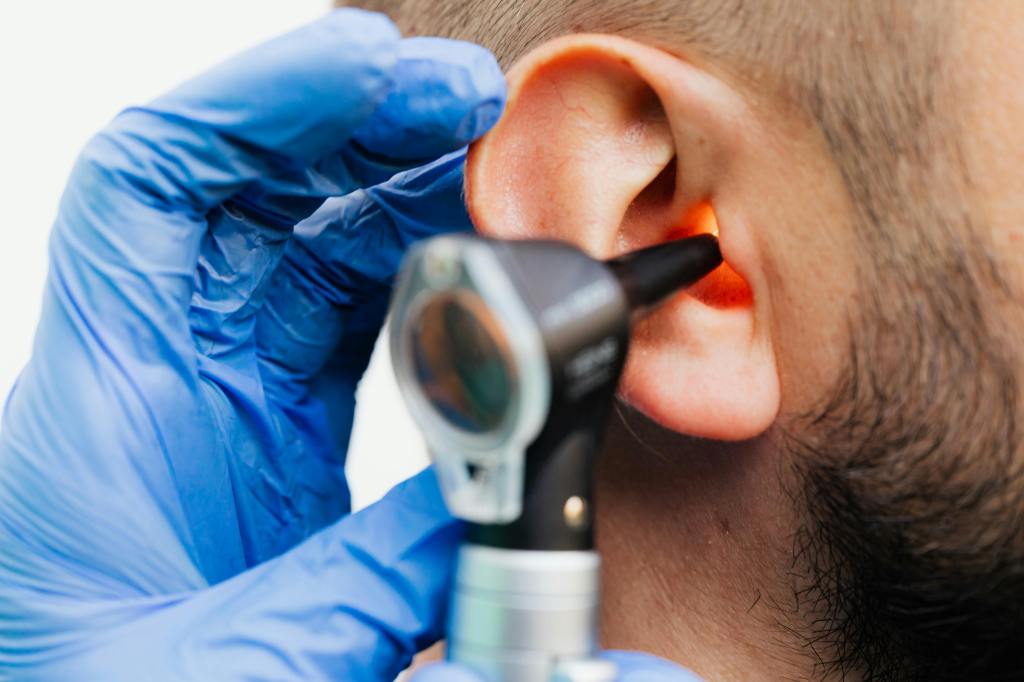
This isn’t about vanity or convenience; it’s about longevity. If you’ve been brushing off minor hearing struggles as “not a big deal” it might be time to reconsider. Your brain is listening and it needs you to listen as well.
 Healthy Paula
Leave a comment