

I am currently in the middle of a little self-experiment. 14 days with a continuous glucose monitor (CGM) on my arm and endless curiosity about how my body reacts to my everyday meals and routines. I am not diabetic, although I have many close relatives who are, which is enough to make anyone wonder what is really going on under the skin.
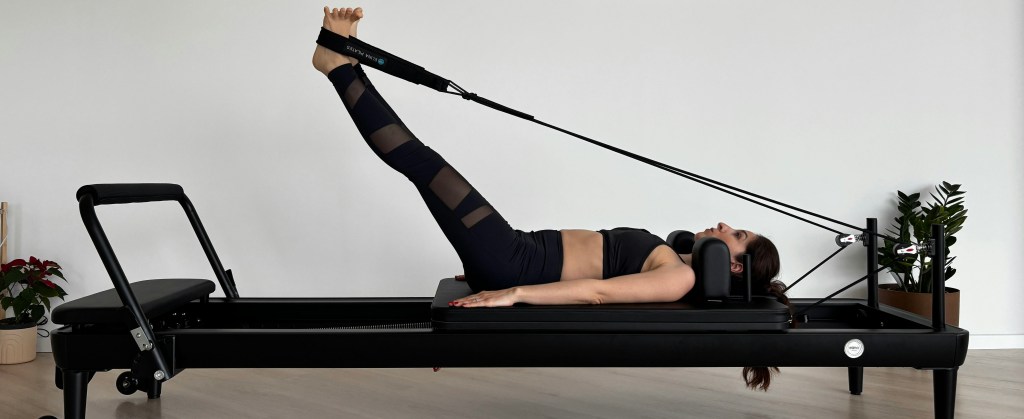
For almost two years I have been doing intense reformer Pilates (Jetset Pilates to be precise), the kind that makes you sweat in the most graceful possible way. I know exactly what it does for my outside. I feel it sculpting my muscles, polishing my posture and lifting my mood. I know how it boosts my stamina and clears my mind with the most addictive way of challenging every fibre of willpower in 50 minutes.
But what about the rest that I cannot see? What happens to my blood sugar, my internal energy use, my metabolism, my “invisible fitness”?
Well, as soon as I started wearing my CGM, I noticed something surprising. During my Jetset session, my blood sugar climbed. Noticeably spiking , not in a concerning way, but very clearly. And if you have ever worn a CGM you might have seen this too (and can actually be happening even if you have no “external proof”)
So there is something that might feel counter-intuitive:
A rise in blood sugar during exercise is often not a bad thing. In fact, it can be a sign your body is working exactly as it should.
What??!!
It is actually simpler that it sounds.
The Body’s Natural Fuel Delivery System
When you start moving with intensity, your muscles shout for energy. Not politely. Not gently. They demand it vehemently. Your body’s priority becomes fuelling those yelling muscles as fast as possible. The easiest, and quickest fuel your body can provide is glucose, so it releases some from your liver into your bloodstream.
This is not a malfunction. This is clever design. It is your body’s version of a supermarket opening new tills on a Saturday morning. It is simply trying to keep up.
This is why your glucose can rise during a strength class, a run, a fast walk or, in my case, a Jetset session that looks elegant but feels like moving through invisible wet cement on a four-count. Your body is not “spiking” in a dangerous way. It is responding to stress in a healthy, controlled way.
The Magic Is in What Happens Next
Within limits, what truly matters is not the rise but the recovery.
After your workout your muscles stop shouting and start absorbing glucose like sponges. This helps your blood sugar come down naturally, often to a level lower than before you began. This rebound effect is one of the many benefits of exercise.
A controlled rise then a healthy drop is actually proof that:
- Your liver is responsive, providing glucose at the precise moment it is needed
- Your muscles are insulin sensitive: they can not only ask for fuel but absorb it correctly.
- Your metabolism is flexible: it can go from relax to stress and back efficiently
- Your body can switch fuels smoothly from glucose to carbs as provided and needed.
- You are using and replenishing energy efficiently: your body is ready for whatever the day brings.
That is metabolic health in action. That is exactly what we want.

Exercise “Spikes” Are Not Food Spikes
A cake spike and a Pilates spike are not twins. They are not even cousins. They simply share a number on a screen.
A food spike is your body scrambling to manage incoming carbohydrates.
An exercise rise is your body deliberately releasing stored energy to support movement.
The first can strain your system when repeated too often.
The other is an adaptation that improves your system over time. You may have seen this in other pieces of data such as heart rate recovery and soreness.
If your glucose rises to 110, 120 or even 130 during intense movement, then returns to normal or slightly lower afterwards, that is a sign your body is doing exactly what it should.
Should Everyone Watch Their Glucose for a Week?
The quick answer is no.
Glucose levels are just one of many pieces in this puzzle. And, as useful and enlightening as it can be, this may not be suitable for everyone. People with obsessive behaviours, eating disorders or other issues may be better off with a “guided tour” and not just a constant flow of data.
As for me, and maybe you, I am learning things and confirming others.
You discover which meals keep you steady beyond the obvious “pasta will make you spike” or how to combine them to make a less sudden up and down trace.
You see how a short walk can lower your glucose effectively and what speed is optimal.
You understand your hormonal patterns, your stress responses, your sleep.
You connect what you do with the outcome in your biology in real time.

For me, seeing the internal impact of Jetset Pilates has been eye-opening. I already knew how I felt during and after class. Now I can see how much my body loves the challenge on a metabolic level too. Even if I still label myself as a “non-sporty” gal.
If You See a Rise, Don’t Panic. Get Curious.
A normal and temporary exercise spike is usually a sign of strength, not weakness. It shows your body is awake, responsive and able to mobilise fuel when you need it. But you should also observe what happens after you exercise just as diligently.
Without this rise you would not have the energy to work hard.
Without the recovery afterwards you would not build resilience.
So if you have been nervous about “exercise spikes” on your CGM, take a breath. They are not only normal but expected. And in many cases they show that your metabolism is alive, well and recovering.
Curiosity will give you data, and data is power. The more you learn about your body, the more you can support it from the inside out.
 Healthy Paula
Leave a comment